
In Ayurveda, the menopause is regarded as a time when the Vata Dosha (an Ayurvedic constitutional type) increasingly comes to the fore – the principle that represents movement, dryness, cold and restlessness. This can lead to an imbalance which may, for example, result in sleep disturbances, inner restlessness, dry skin and mucous membranes, as well as joint discomfort. The Pitta Dosha, which is associated with heat, acidity and pungency, can further exacerbate this imbalance. It can, for example, contribute to hot flushes and irritability. The life essence, Ojas, is often weakened during this phase of life. A mindful, balancing diet can help to counteract the symptoms of the menopause.
Vata-Balancing
- Pumpkin, sweet potatoes and ghee, with their sweet, oily qualities, can soothe excess Vata – they are grounding and helpful for dryness
- Dates, dried apricots and raisins are considered restorative and are used to treat exhaustion and lack of energy
- Spinach is considered nutrient-rich and promotes blood formation
Okra is thought to support the mucous membranes, thereby counteracting dryness
Pitta-Balancing
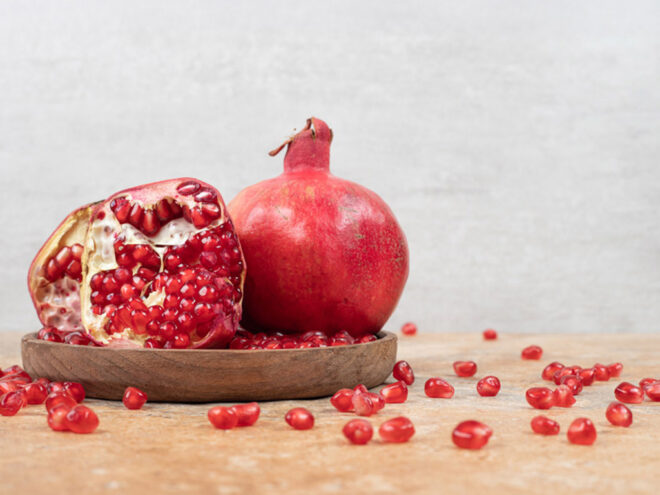
- Coconut, cucumber and pomegranates are considered to have a cooling effect – helpful for hot flushes
- Cardamom and fennel have a cooling effect and aid digestion; cardamom is also traditionally used to lift the mood
Ojas-Strengthening
In Ayurveda, Ojas refers to the essence of strength, resilience and inner stability. Fresh, natural and nourishing foods help the body to build up its strength and regenerate. Warm, easily digestible meals, ripe fruit, almonds, ghee, fresh milk and mung dhal are considered to promote Ojas – as are sufficient rest and sleep.
Important: This article is for general information purposes only and does not constitute medical advice. If you experience persistent or severe symptoms during the menopause, you should always seek advice from a doctor or alternative practitioner.